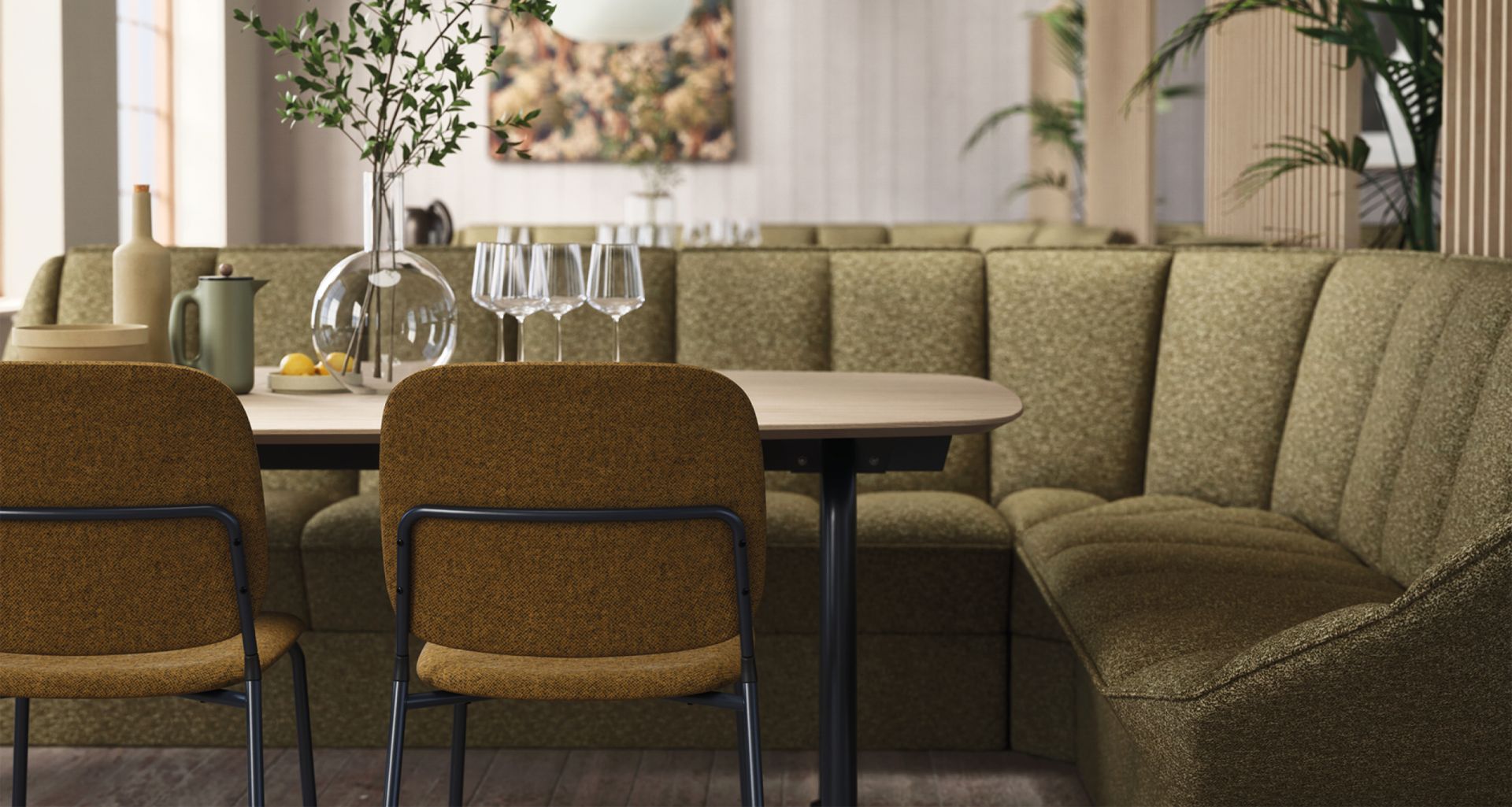
Thoughtful material choices for today and tomorrow
Choosing the right materials involves balancing a range of factors, including sustainability, cost, quality, functionality, design and flexibility – and different environments place different demands on the materials used. At the same time, material choices are increasingly influenced by considerations such as climate impact, chemical content, circularity, and the ability to repair and update products over time.
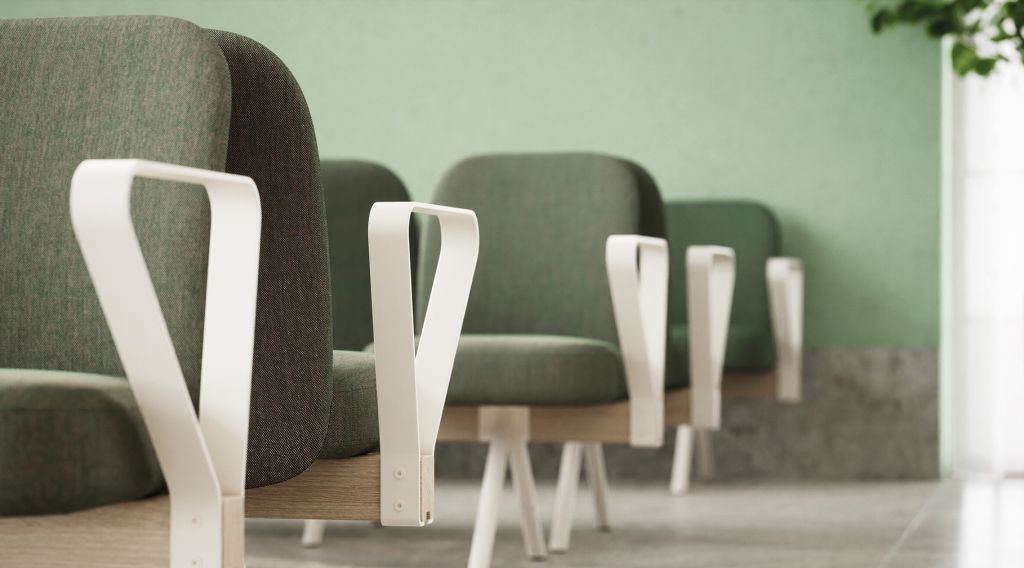
With its organic forms and warm materials, the Appoint beam sofa creates seating that is both elegant and comfortable in public environments.
How an armrest feels against the skin, the sound a chair makes when it is pulled out, or the way textiles influence noise levels are all examples of how materials shape the experience of a space. The most suitable materials depend on how the environment is used and which qualities need to be prioritised. In some settings, durability, ease of cleaning or fire performance are essential, while comfort, tactility and acoustics may be more important in others.
Different environments, different requirements
In high-traffic environments such as cafés, restaurants, healthcare facilities and public spaces, materials need to withstand intensive use and frequent cleaning. Durable textiles, laminate or HPL table tops, lacquered wood surfaces and materials that resist liquids, impacts and repeated wiping are well suited to these settings, maintaining their appearance over time. In lounge and meeting environments, comfort, atmosphere and acoustics often become more important. Upholstered furniture, wool fabrics and solid wood can contribute to a warmer and more inviting atmosphere, while also helping to create a calmer acoustic environment.
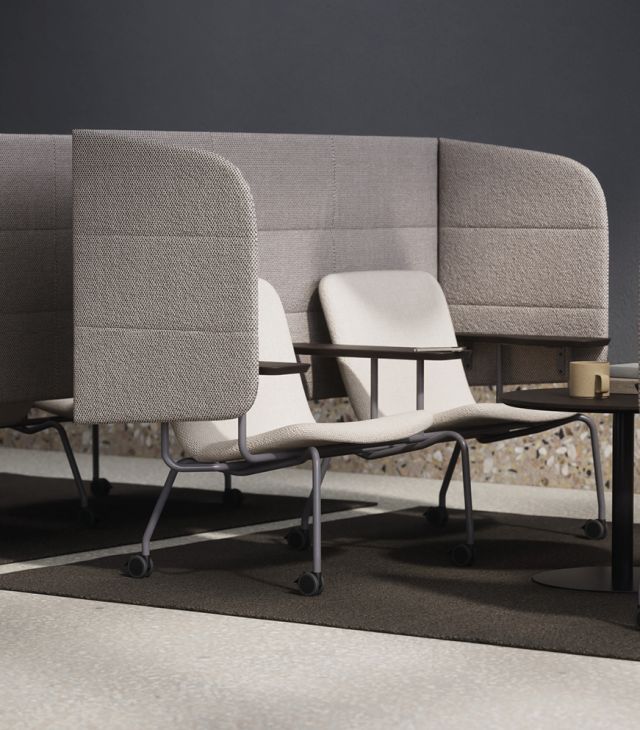
The upholstered hybrid furniture Hybe, with integrated screen partitions, offers more secluded seating and contributes to a quieter acoustic environment.
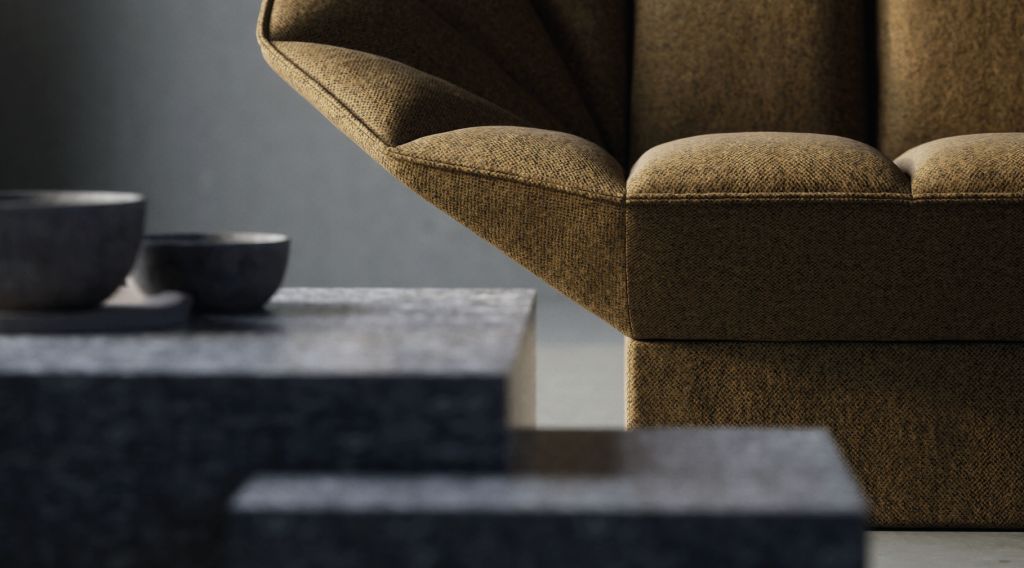
Hard surfaces and soft textiles can be combined to create a harmonious whole.
Balancing materials for better spaces
When materials are combined, contrasts in expression emerge. Chrome-plated metal, stone or glass often need to be balanced with textiles and wood to create a more harmonious whole. The combination of hard and soft materials helps establish the right atmosphere for different types of environments. Depending on the materials used, a space can feel warm and welcoming or more pared-back and minimalist. At the same time, materials influence acoustics – affecting both how sound is generated and how it is absorbed. Hard surfaces reflect sound, while softer materials help dampen it. In open work environments, where many people share the same space, the mix of materials becomes especially important.
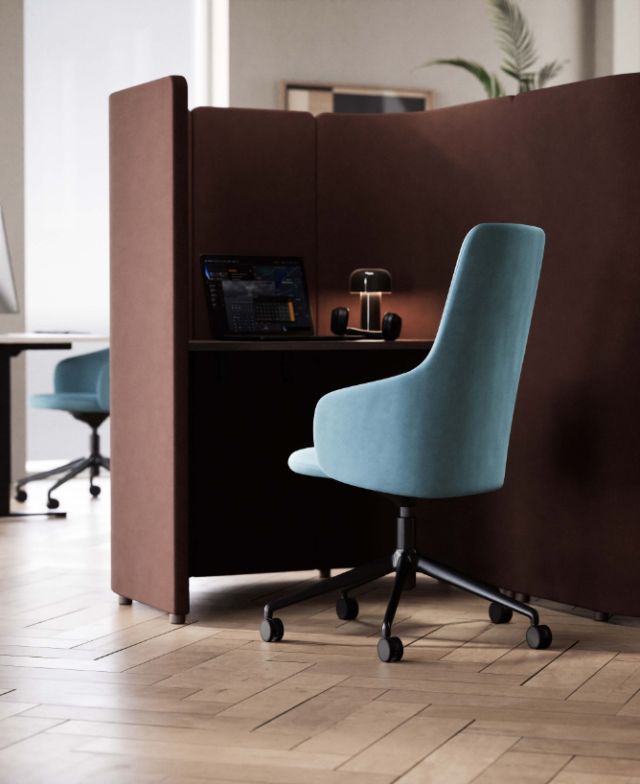
Materials influence how sound is generated and absorbed – a balance that becomes especially important in open work environments where many people share the same space.
Materials also influence comfort, which is about more than ergonomics alone. Temperature and tactility play an important role as well. Upholstered furniture enhances seating comfort, while wood is often perceived as more pleasant than metal or hard plastic where the body comes into contact with the furniture.
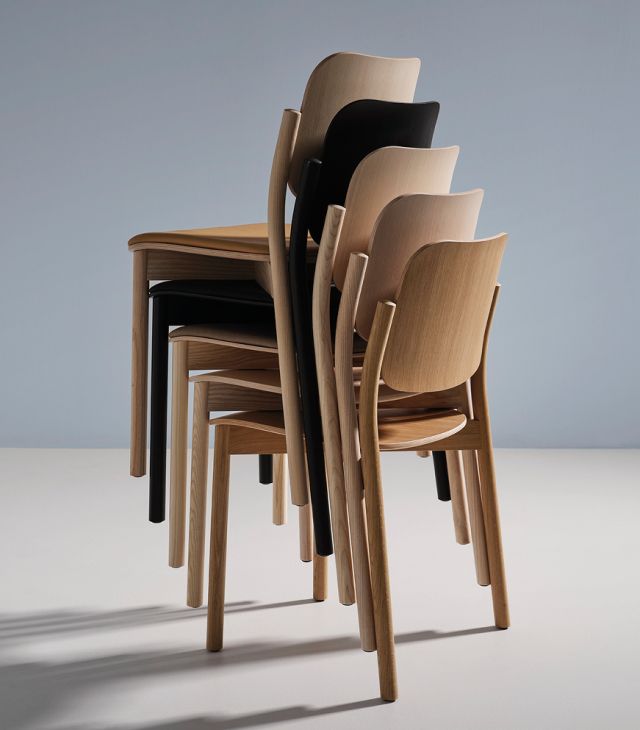
Many expressions and possibilities with wood
Wood is often used to create a natural expression and brings greater warmth than metal and plastic – both visually and in terms of how it feels. It is also highly versatile and lends itself well to organic forms. Different wood species create different characters: oak is often perceived as darker and more robust, while ash and birch create a lighter expression.
Different wood species and finishes give Zoe distinctly different expressions, while retaining the natural warmth of wood.
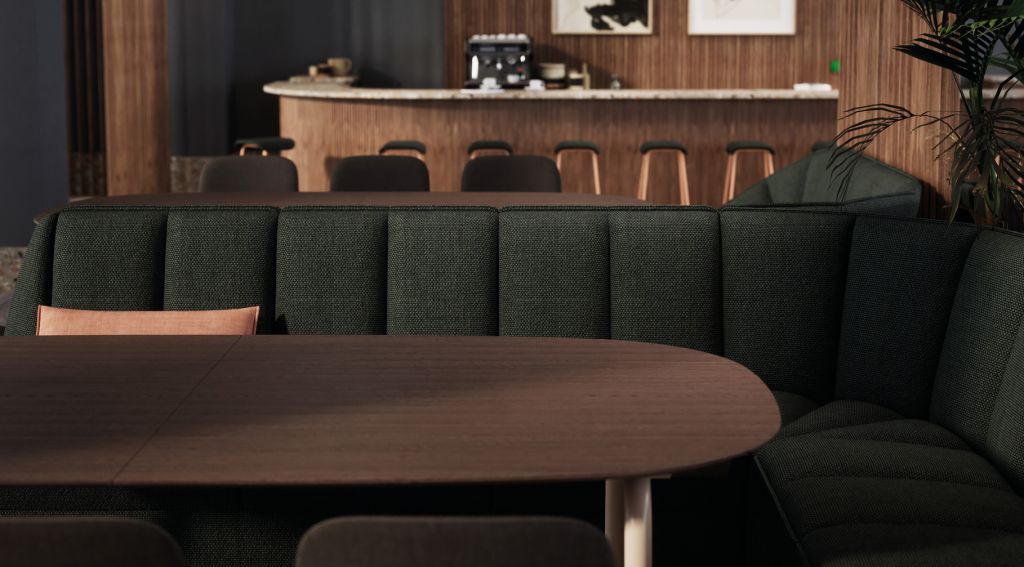
The natural structure of wood creates life and character, even when stained in darker tones.
The way wood is processed also affects its appearance. Ash, oak and pine with straight grain patterns create a calm and orderly look that works well in public environments where many pieces of furniture share the same space. Veneers with more knots and variation in the grain create a livelier character. The same wood species can also take on very different expressions depending on the stain used, while the natural structure beneath the surface always remains visible, adding depth and richness to the material.
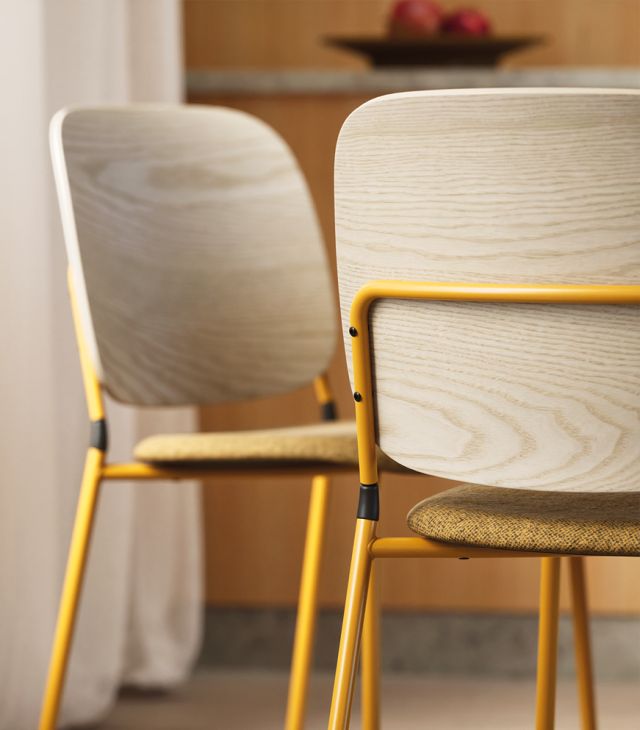
What does sustainable really mean?
As a large share of a product’s climate impact occurs during material production and manufacturing, long service life is a key aspect of sustainability. The longer a product remains in use, the more its environmental impact is distributed over time. At the same time, materials need to be evaluated from multiple perspectives. In many cases, wood has a lower climate footprint than metal and plastic. A wooden piece of furniture also stores carbon throughout its lifespan, provided it is not landfilled or incinerated. Wood can also be maintained and refreshed through sanding or refinishing. Metal, on the other hand, offers high strength and excellent recyclability. Textiles involve different trade-offs as well. Wool is valued for its comfort, durability and natural fire-resistant properties, but often comes with a relatively high climate footprint. Synthetic alternatives may, in some cases, offer a lower climate impact depending on how the materials are produced.
Bow combines wood and metal – materials that offer different sustainability benefits.
When the goal is to create products with a long lifespan, construction becomes just as important as material selection. Good design makes it easier to repair, reupholster or replace components as needs change. Rounded edges are another example of a durable design feature, helping to reduce wear and make furniture more resilient in everyday use.
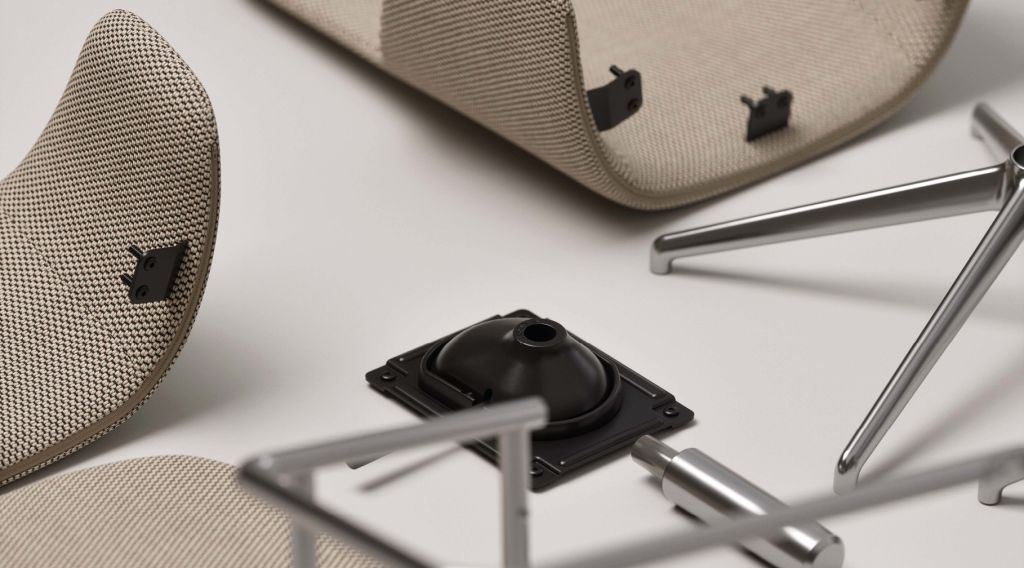
Long service life is not only about material selection, but also about how a product is designed and constructed.
The materials of tomorrow
The demands placed on materials are constantly evolving. Looking ahead, low climate impact, transparency, reuse and recyclability will become even more important. Regulations, certifications and industry requirements are also influencing which chemicals may be used, while companies are setting their own standards through schemes such as Möbelfakta and the Nordic Swan Ecolabel. For EFG, this influences both material selection and design. Through our layer-by-layer design approach, components that wear out or lose functionality can be separated, repaired and updated to meet future requirements.
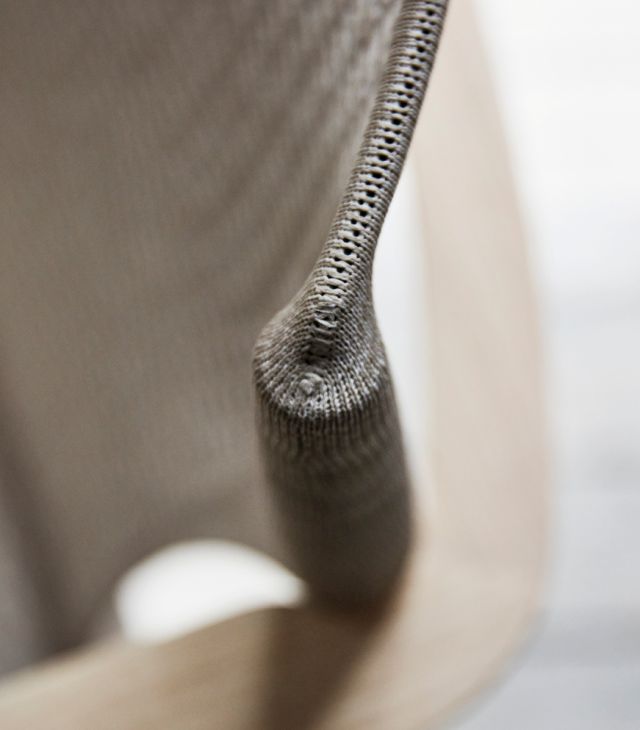
Evo’s seat and back are made from 3D-knitted recycled polyester – an example of how new technology can contribute to more resource-efficient solutions that minimise waste.
At the same time, workplaces are changing. Flexible environments that support multiple activities place new demands on materials, which must withstand greater movement and adaptation. The ambition to create more welcoming environments is also increasing demand for warm materials such as wood, linoleum and textiles, which contribute to comfort and improved acoustics. As a result, durability, wear resistance and the ability to update interiors over time are becoming increasingly important, not least because warm materials often show visual wear more quickly.

New applications for existing resources are creating new possibilities for the materials of the future.
In the future, we are likely to see more wood and bio-based materials such as bamboo, hemp and seagrass, as well as a growing use of recycled materials including recycled plastics and green steel. Foam and padding may increasingly be replaced by springs and steel, as foam remains difficult to recycle. At the same time, new solutions are emerging to make use of resources already in circulation, such as finding new applications for textile offcuts and turning reclaimed linoleum flooring into table tops. We also see a trend towards more innovative materials, including pressed cellulose-fibre boards and plant-fibre composites as alternatives to fibreglass.