Our sustainability course “Designing for the Future” returns
From 15–17 September, our tailored sustainability course “Designing for the Future” returns – this time in Tranås. Over the years, the course has brought together many architects and designers who share our ambition to address the sustainability challenges facing our planet. We are now looking forward to three inspiring days filled with knowledge, new perspectives and valuable conversations. A warm welcome!
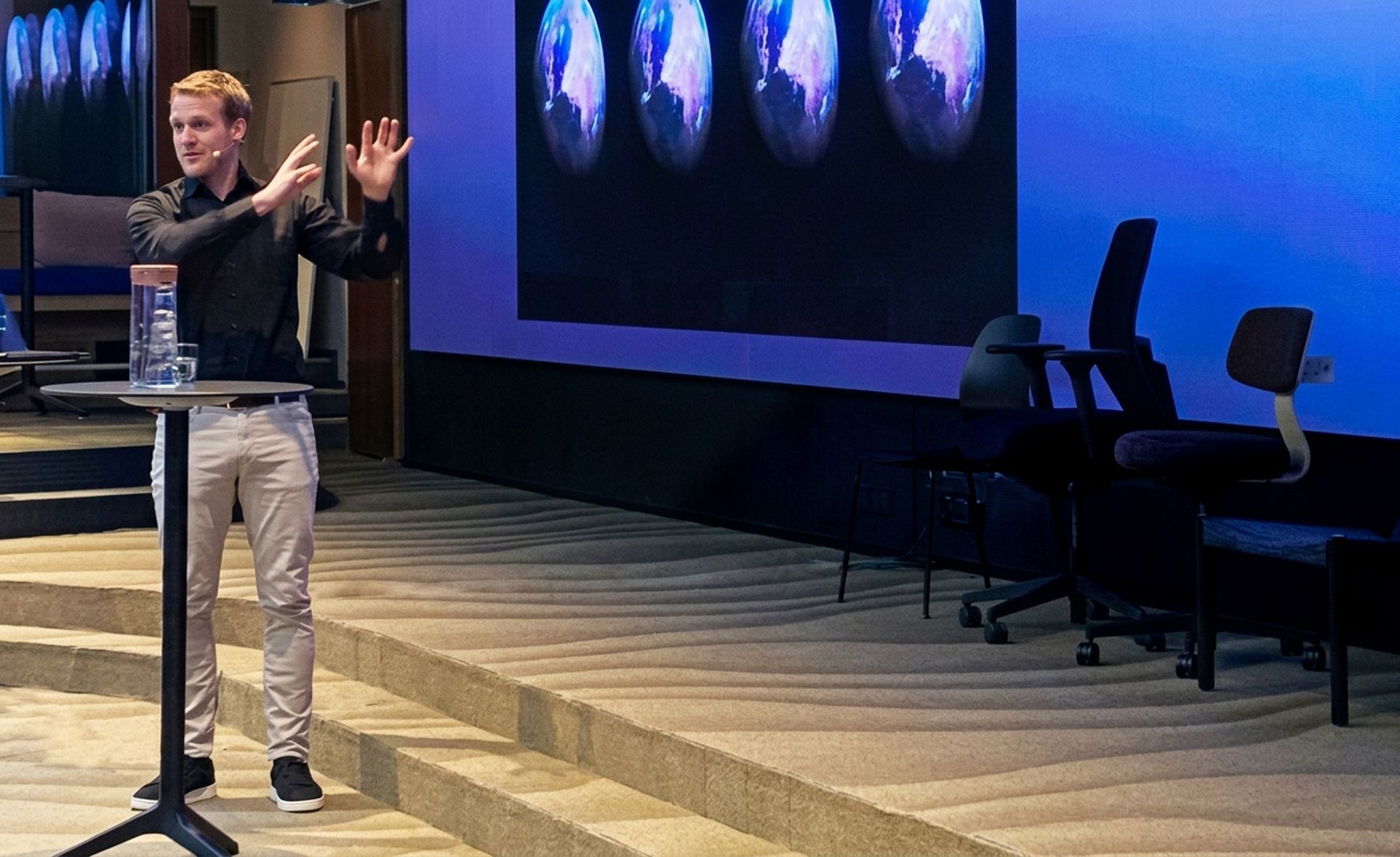
The course offers a deeper understanding of current and future sustainability challenges within the furniture industry. With a focus on identifying the most environmentally friendly furniture options, participants will learn about material choices, CO2 footprint measurement through EPDs and environmental certifications. The course also covers current and upcoming environmental requirements for public procurement, supply chains, and testing standards. Additionally, participants will gain an understanding of important global sustainability topics such as circular economy, and life cycle analysis. This course aims to provide delegates with the knowledge necessary to support customers in making sustainable choices and addressing sustainability questions in line with legal requirements and certifications.
A recurring theme throughout the course is how we use the planet’s resources and how the furniture industry can help reduce its impact. We take a closer look at planetary boundaries and place the furniture industry’s environmental impact in a broader context. We also explore global sustainability topics such as the circular economy and life cycle assessment (LCA). An LCA maps a product’s environmental impact throughout its life cycle – from materials and transport to production and resource use – and in turn forms the basis for an EPD. Participants will learn how to interpret and use the information in an EPD to compare the environmental performance of different products – and why it is important not to focus too heavily on a single figure or parameter. Theory is combined with practical examples from the EFG range, where we take a closer look at the sustainability credentials of individual products and the choices made during their development.

The course also covers current and upcoming environmental requirements for public procurement, with a focus on circularity, supply chains, testing standards, environmental labels and EPDs. We will also review new legal requirements linked to the EU’s climate goals and their impact on companies, products and value chains. These include increased requirements relating to ecodesign, resource use, traceability and product information.

Course content
Current sustainability issues and challenges
– Globally
– Within the furniture industry
– Key focus areas
– EFG’s goals, vision and sustainability work
What makes a more sustainable piece of furniture?
– Materials and raw materials
– Chemicals
– Carbon footprint
– Recyclable materials
– Circular business models
– LCA (Life Cycle Assessment)
– EPD (Environmental Product Declaration)
– Environmental labels and certifications

Environmental requirements with a focus on public procurement
– Linear vs circular economy
– Procurement requirements for new furniture
– EU climate goals
– The European Green Deal
– PPWR (Proposal Packaging and Packaging Waste Regulation)
– EUDR (EU Deforestation Regulation)
– CSRD (Corporate Sustainability Reporting Directive)
– ESPR (Ecodesign for Sustainable Products Regulation) and DPP (Digital Product Passports, information requirements)
– Supply chains
– Testing requirements and reports
– EPDs and environmental labels
– Agenda 2030 and the UN Sustainable Development Goals