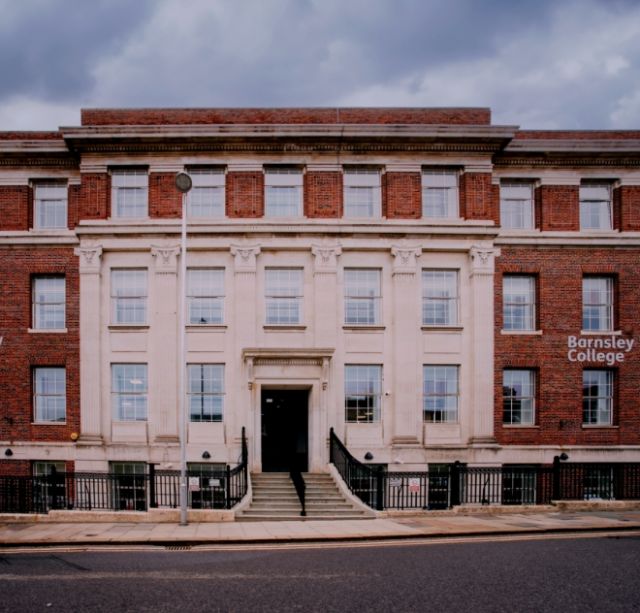
In central Barnsley, a 93-year-old art deco building – formerly the Barnsley Mining and Technical College – has been transformed into a modern university centre. The goal was to create a higher education environment that mirrors a professional workplace, supporting both independence and interaction.
Barnsley College University Centre (BCUC) balances heritage with innovation. Original features such as brickwork walls, stained glass and Portland stone have been preserved, while lighting, materials and furniture introduce a modern expression that encourages both collaboration and focused study.
“It was crucial that it didn’t end up looking like a school, but a place where adults can experience a high-level business environment before entering their profession,” says Paul Langton, Director of Capital Projects at BCUC.
This ambition shaped every design decision – from the spatial layout to the choice of furniture. A key requirement was that rooms should be adaptable to the learning taking place, not fixed like standard classrooms.
CASe
Customer: Barnsley College University Centre (BCUC)
Floor space: 6 300 sqm
Location: Barnsley, South Yorkshire
Business operation: Higher education
Interior designer: NIRAS Architects
Contractor: GF Tomlinson
EFG’s role: Furniture supplier
Completed: 2025
A dynamic layout with distinctive zones
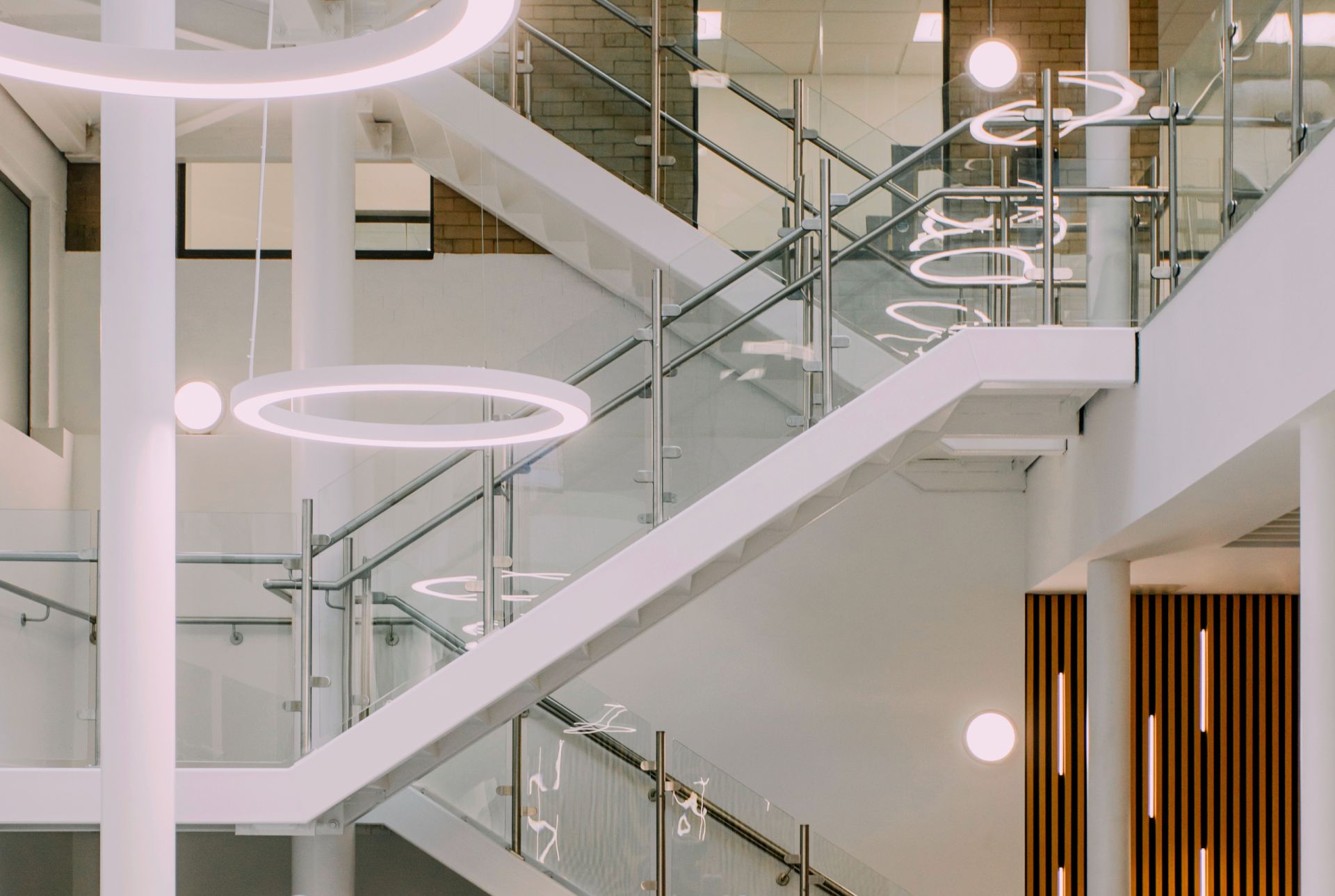
The refurbishment introduced three mezzanine floors into what was once a courtyard, now transformed into a bright atrium with a new roof. To enhance the natural light, roof lights were installed along with halo-style lamps at different levels. Timber panels with integrated vertical lighting add a subtle digital-tech feel.
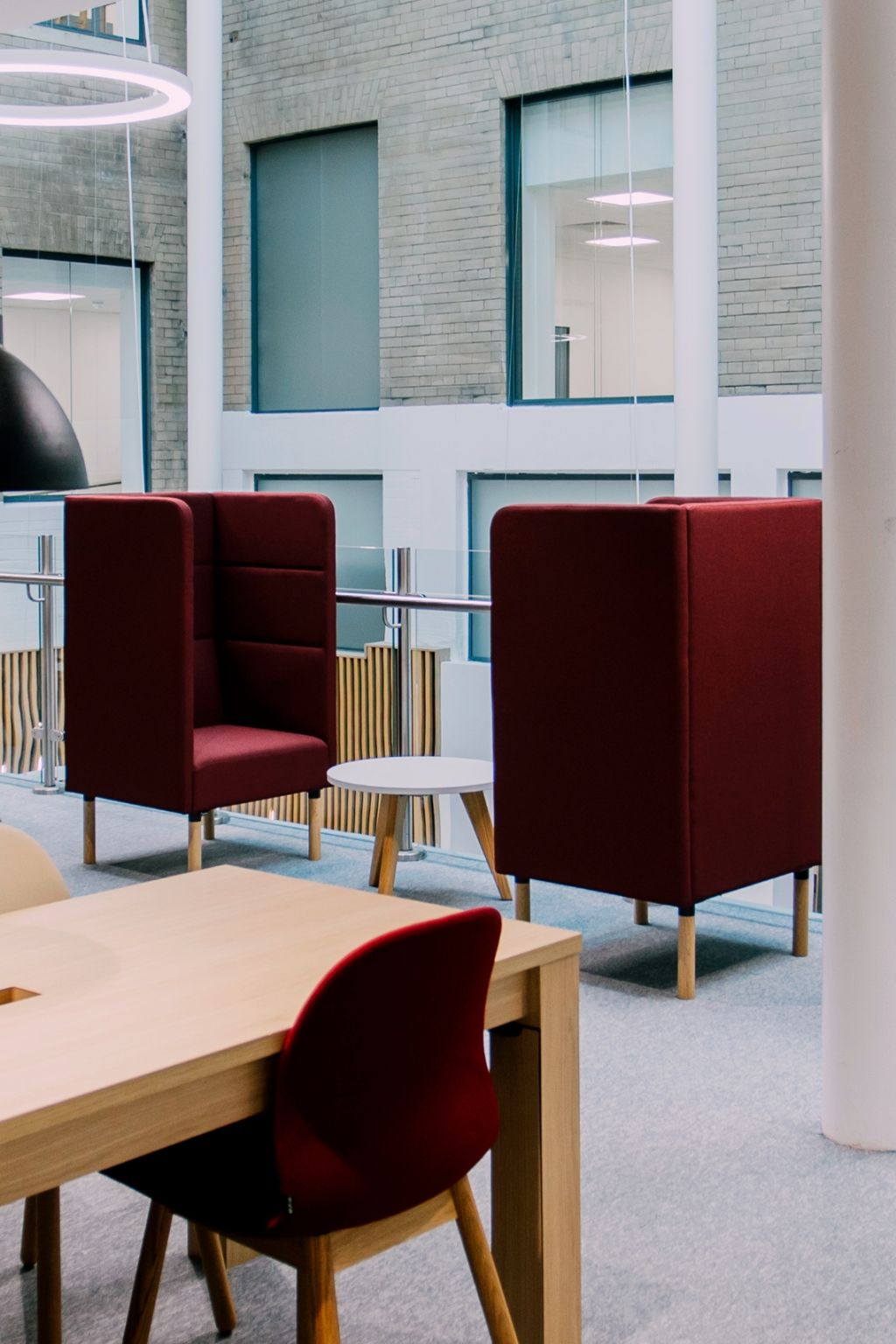

The library has been furnished with Mingle in both low and high versions, along with Archie chairs with wooden legs. Photo: JAKT Photography
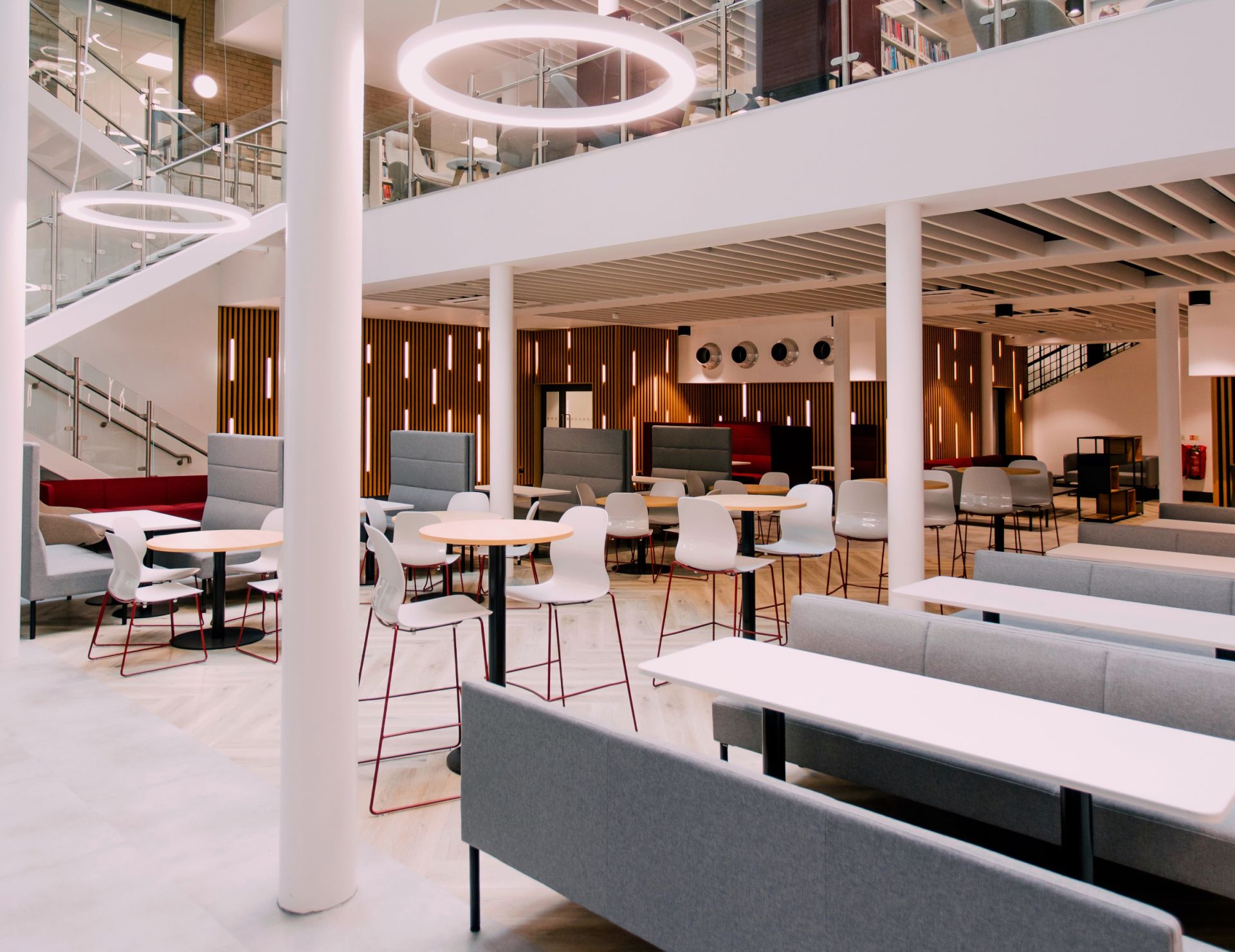
In the airy atrium, Archie barstools and Mingle sofas provide the perfect setting for a quick coffee or longer meetings. Photo: JAKT Photography
This atrium serves as the heart of the building – ideal for spontaneous meetings, longer collaboration sessions or quick coffee breaks. One floor of the atrium also houses a library, designed for both focused reading and group study. Acoustics were carefully planned throughout to support concentration and comfort.
“Some areas are more collaborative, but overall we needed excellent acoustics to help students read and revise,” says Chris Sparrow, Director of Architecture at NIRAS Architects.

The Yoyo chair with grey mesh back fits perfectly with the tech-inspired aesthetic of the IT suites. Photo: JAKT Photography
Surrounding the atrium are light and spacious classrooms, staff offices, IT suites and informal meeting spaces. The classrooms are furnished to accommodate flexible learning setups, each with integrated breakout zones.
“We’ve kept the classrooms open and light, which really allows the furniture to stand out,” says Helen Foster, Director of Adults and Higher Skills at BCUC.
Furniture that supports flexible learning
To support this flexible approach, EFG delivered a mix of furniture, tailored to different study needs. Aesthetics, comfort, functionality and acoustics where all key considerations.
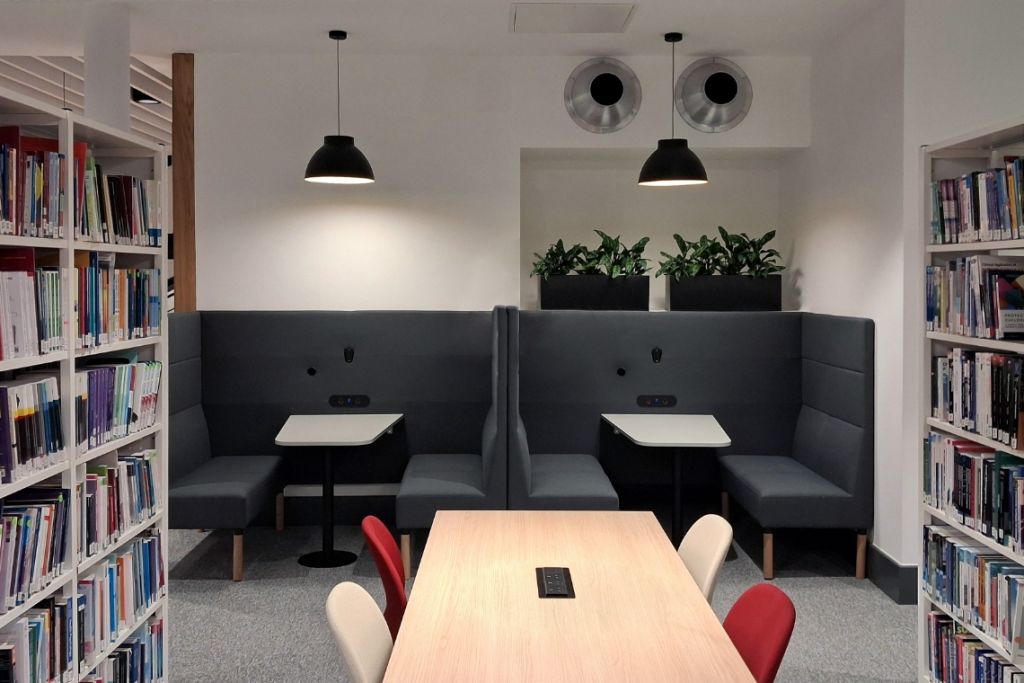
The library has been furnished for optimal acoustics with custom-designed Mingle booths with high backs.
Photo: JAKT Photographyy
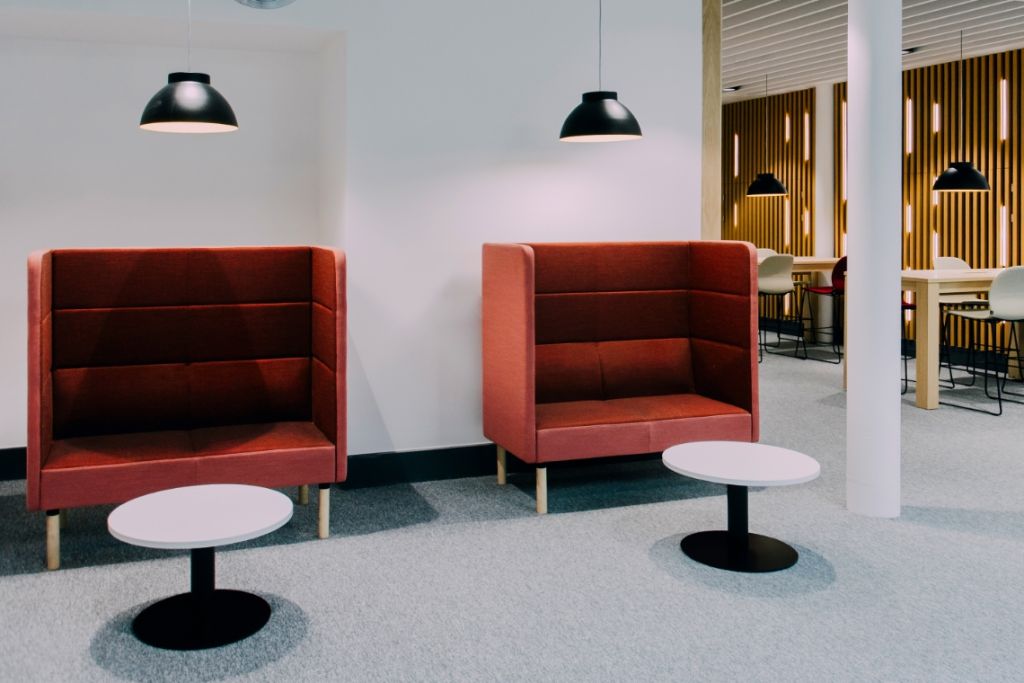
The Mingle sofa system also works well in breakout areas. Photo: JAKT Photography
The Mingle sofa system is used in both low- and high-back versions in the atrium, café and breakout areas. In the library and quieter study zones, custom-designed Mingle booths with high backs seat up to four people around a central table with a built-in screen at the back, providing excellent sound-absorption.
The acoustics of the Mingle sofas are fantastic – they really help with reading focus
Paul Langton, Director of Capital Projects at BCUC.
Textiles were adapted to suit each environment: durable and cleanable in high-traffic areas, softer and more tactile in learning spaces. All fabrics are fire-resistant, and the cohesive palette contributes to a harmonious interior.
The Archie chair was selected in three variants: sled base and barstools for the café, atrium and informal spaces; and a version with wooden legs for the library. With clean lines and ergonomic design, Archie bridges both relaxed and structured settings. In the IT suites, Yoyo chairs with grey mesh backs offer lightness and support, while echoing the building’s sleek tech-inspired aesthetics.
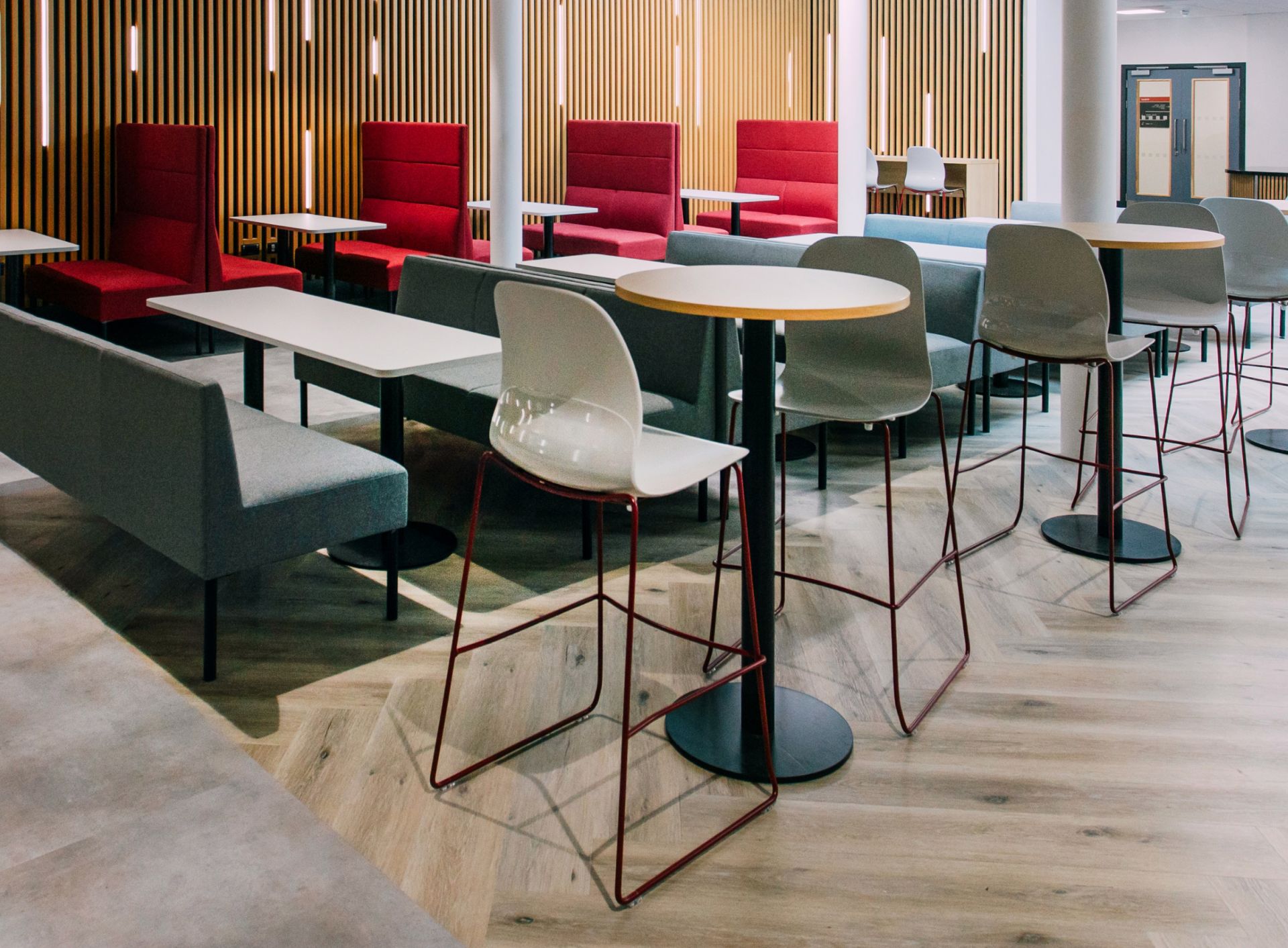
In the café areas, there are different types of seating with Mingle in both low- and high-back versions, as well as Archie in a barstool variant. Photo: JAKT Photography

A space for growth and connection
BCUC’s transformation is more than visual – it redefines how students interact with their environment, allowing them to choose how and where they learn. Every space has been designed to reflect a modern workplace, where breakout areas are considered equally important as the classrooms. The result is a higher education environment that respects the past while actively preparing students for the future.
Photo: JAKT Photography